Rust, How a Secret Mountain Base Survives a Whole Wipe
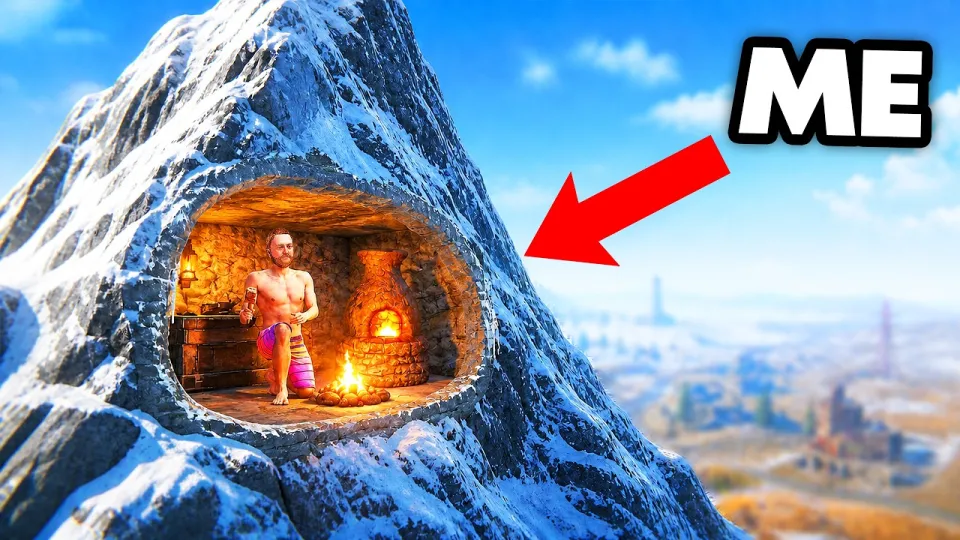
Video: I Lived in a Secret Mountain Base in Rust
You can order the same kind of articles for your own video to boost it on YouTube and Google. Just message the Telegram bot @sat_sit_bot. Articles with your video embedded are written and posted by the bot itself — on popular topical sites (no ads). Free trial — 50 articles.
· based on the channel Memeio
Rust is a survival game where a secret mountain base works because the cheapest raid defense is never being found: a small, well-camouflaged structure tucked into cliffs and rock pockets costs almost nothing to build and removes the need for honeycomb, turrets and offline-raid insurance. Memeio's run "I Lived in a Secret Mountain Base in Rust" takes that logic to its conclusion — a wipe spent in terrain nobody bothers to search. Updates and clips from the channel land on Memeio's X account, and the video itself is the source for the tactics below.
Why a hidden base beats a fortified one in Rust
A hidden base in Rust trades building cost for concealment, and that trade usually wins for solo players. A 2x2 with stone walls, sheet metal doors and a tool cupboard is a known quantity: raiders know roughly what it costs to break in, and they know where to look because popular mountain spots get scanned every wipe. A 1x2 wedged into a cliff face at an odd angle is not on that list — most raiders ride past it, and the ones who do see it often assume it is decayed or already looted.
The math is simple. Every wall you do not build is sulfur you do not spend, and every hour you do not spend farming is an hour you spend on monuments, roads and PvP. The trade-off is that concealment fails catastrophically: once someone knows where the base is, a small footprint has no layers to fall back on. That is why hidden-base players treat the location itself as the main defense and everything else as a backup.
Picking a mountain location that actually hides
Mountain terrain in Rust hides bases in specific ways, and picking the right slope matters more than the building itself. Cliffs create blind angles — a base placed below a ridge line is invisible from the valley floor but still reachable from above, which is exactly the approach most players never take. Rock formations, ice sheets and the shadowed north faces of mountains all break up the shape of a small structure.
What to avoid:
- Flat plateaus near monuments — these are the first places raiders and roaming groups check.
- Obvious silhouettes — anything sticking above the skyline is visible from half the map.
- Choke points next to popular roads and spawn beaches, where foot traffic is constant.
- Slopes with no cover for a second stash, which leaves you with nothing if the main base is found.
What to look for: a pocket of terrain where the ground itself blocks line of sight from two directions, a short walk to a recycler or a road, and enough flat ground to place foundations without exposing the roof.
Building small: footprint, materials and camouflage
The smaller the footprint, the easier a base is to hide, and Rust's building system rewards players who accept cramped interiors. A 1x2 or a 2x1 with a single triangle extension holds a tool cupboard, two large boxes, a furnace and a sleeping bag — enough for a solo wipe if you are disciplined about what you keep. Upgrade the core to stone early; a wood base that gets spotted is a free raid for anyone with a hatchet.
Camouflage is where most players give up too early. Skins matter: dark, rock-toned or snow-toned building skins blend into mountain terrain far better than the default grey, and a roof skin that matches the ground beneath it does more work than an extra wall. Keep the structure low, avoid unnecessary windows, and do not build a visible staircase up to the door — jump-ups and rock hops leave no trace on the skyline.
One practical note from experienced solo players: broken wooden spears can be recycled into stone spears at a crafting bench, effectively doubling the number of throwables you get from the same stone. It is a small trick, but on a mountain base with limited storage, every inventory slot counts.
The problems nobody warns you about
A secret mountain base creates a set of maintenance problems that a normal base does not have. Tool cupboard upkeep is the biggest one: remote locations mean longer farming trips, and a base that decays while you are away is worse than one that gets raided. Stock the cupboard with enough stone and wood for several days, and check it every session before you do anything else.
Access is the second problem. Mountain bases are hard to reach, which cuts both ways — raiders struggle, but so do you when you are carrying loot back from a monument. Plan a route, use a horse or a minicopter if the terrain allows, and keep a small forward stash near a road so a bad fight does not cost you everything.
The third problem is boredom. A hidden base means fewer fights, fewer neighbors and less action, which is exactly the trade Memeio's run leans into. If you want constant PvP, this style will frustrate you; if you want to build up quietly and pick your fights, it is one of the most efficient ways to play solo.
What actually gets a secret base found
Secret bases get discovered through patterns, not through luck, and most of those patterns are avoidable. The most common one is traffic: building near a monument, a road or a popular mountain climbing route guarantees that someone will eventually walk past. The second is visibility from above — players love to climb mountains, and a base visible from a peak is a base that gets marked on a map.
The third pattern is behavioral. Repeatedly running the same route from your base to a monument creates a trail that other players notice, especially on low-population servers where every encounter is remembered. Vary your exits, avoid fighting near home, and never lead a chase back to your door.
Finally, there is the honest limitation that viewers of this style of content point out every time: a base that blends into a mountain is only invisible to players who are not looking. A camouflaged 2x2 is not a magic trick — it is a bet that nobody bothers to check. On a busy server that bet loses eventually, which is why the run is best treated as a strategy for quiet wipes and low-to-mid population servers rather than a guarantee.
Common questions about mountain bases in Rust
Solo players ask the same things every time a hidden-base video goes up, and the answers are mostly about expectations. A mountain base is not raid-proof; it is raid-unlikely. It does not remove the need to farm, fight or defend; it changes where those things happen. And it does not work on every server — high-population official servers get scanned far more thoroughly than small community ones.
The other recurring question is whether the style is worth copying. For a player who enjoys building, routing and quiet progression, yes: the cost is low, the risk is concentrated in one decision (the location), and the payoff is a wipe without a single offline raid. For a player who wants constant action, the same setup feels like a cage.
Useful links
- Memeio on X — channel updates, clips and announcements.
- Epidemic Sound — the music library credited in the video.
Final thoughts
Memeio's secret mountain base run is a clean demonstration of a principle that holds across survival games: the best raid defense is a location nobody finds. The build is small, the materials are cheap, and the real skill is in reading terrain, choosing a slope with blind angles and resisting the urge to expand. It is not a strategy for every server or every player, but for a solo wipe it removes the single most expensive problem in Rust — defending a base that everyone knows about. For more runs in this style, follow Memeio on X.
Key takeaways
- Memeio's run is built on one idea: a base nobody finds is cheaper to defend than a base nobody can raid.
- Small footprints (1x2, 2x1, 2x2) fit into mountain terrain where larger builds become obvious silhouettes.
- A hidden base still needs a plan for upkeep, loot storage and a second stash in case the location is found.
- Raiders rarely search cliff edges and rock pockets, but they do check common mountain monuments and popular spawn routes.
- Memeio's channel (https://x.com/MemeioYT) is where the run and its follow-ups are posted.
Questions & answers
Is a secret mountain base actually safe in Rust?
It is safer than a visible base of the same size, but not safe in absolute terms. Concealment works until someone walks the right ridge line or follows you home; after that, a small footprint has no layers to slow a raid. Treat the location as the main defense and keep a backup stash.
What is the best size for a hidden base in Rust?
A 1x2 or 2x1 with a triangle extension is the usual sweet spot for solo players. It fits into terrain pockets, costs little stone to upgrade and holds a tool cupboard, boxes, a furnace and a bag. Anything larger becomes a visible silhouette on a mountainside.
Do building skins really help camouflage a base?
Yes, more than most players expect. Dark, rock-toned and snow-toned skins break up the shape of a structure against mountain terrain, and a roof skin matching the ground below hides the base from above. Default grey stands out badly on snow and ice.
Why do hidden bases still get raided?
Usually because of patterns rather than bad luck: building near monuments or roads, leaving a visible trail from base to loot route, or being seen climbing to the base. High-population servers also get scanned far more thoroughly, so the strategy works best on quieter wipes.
Source: I Lived in a Secret Mountain Base in Rust · Markdown version